Get The Yulys App
Start your job search on-the-go and
never miss
a message or job alert.
Get The Yulys App
Start your job search on-the-go and
never miss
a message or job alert.


A referral reward can look generous on paper and still give customers little reason to act. The problem is usually not the dollar value, but the usability gap: the space between value assigned and the value the customer can use. No single solution is objectively best; the best referral rewards depend on the desired outcome. Store credit works when another purchase is likely. Cash offers straightforward financial value. Discounts fit short buying cycles. Gift cards give recipients a choice. The takeaway is that the reward must fit the referral.
A reward only works if the customer sees value in it. Account credit can be a great option for telecom providers, especially when customers have a monthly bill. But what if someone is on a prepaid plan, or already gets their mobile service through their employer? Credit might not be particularly useful to them. Discounts have a similar problem, as they’re only valuable if the customer plans to spend more with a given business. Focus on what customers would genuinely appreciate, not what’s easiest or cheapest for a business to offer.
Cash gives customers the freedom to spend their reward however they like. But it can also make a personal recommendation feel more like a paid promotion. When someone recommends their telecom provider to a friend or colleague, the reward should feel like a genuine thank-you, not the reason they made the recommendation.
Recipient-choice gift cards sit between these models. They have a clear monetary value, aren't tied to the referring company, and give recipients more control over where they use the reward. For organizations running programs across a large audience, customer incentives platforms can distribute these rewards at scale. Giftogram combines recipient choice with bulk distribution, scheduled sends, and automated delivery through integrations for referral program rewards.
That operational flexibility accepts the reality that customers have diverse tastes. The strongest incentive is the one that flows most directly into how customers normally spend.
| Reward type | Best suited to | Main limitation |
| Store credit | Frequent repeat purchasers | Requires another purchase with the same company |
| Cash | Programs where direct financial value matters most | Can feel more transactional |
| Recipient-choice gift cards | Broad customer bases | Available choices need to suit the audience |
| Percentage discount | Short buying cycles and frequent purchases | Value depends on a future purchase |
| Charitable donation | Audiences with a genuine connection to the cause | Appeal varies significantly by individual |
Referral programs differ from most paid acquisition channels because the company borrows credibility from the customer making the referral. Nielsen's 2015 survey of online consumers across 60 countries found that 83% trusted recommendations from friends and family completely or somewhat.
The implication? Customer referral incentives are more complex than a simple pricing exercise, and the relationship between the two people is often the most important factor.

Research published in the Journal of Marketing studied how referral rewards interact with social ties and brand strength. Across four experiments, the researchers found that rewards could increase referral likelihood, but the most effective allocation depended on the situation. With weaker social ties and weaker brands, rewarding the person making the recommendation matters more. With stronger ties and stronger brands, giving at least part of the reward to the person receiving the referral became more effective.
Consider two referrals. In one, a customer recommends an unfamiliar service to a casual acquaintance. The referrer is taking on reputational risk and needs a clearer incentive. In the other, someone shares a familiar brand with a close friend. Giving the new customer some of the value makes it a shared experience. Reward structure should follow the behavior the program wants to encourage.
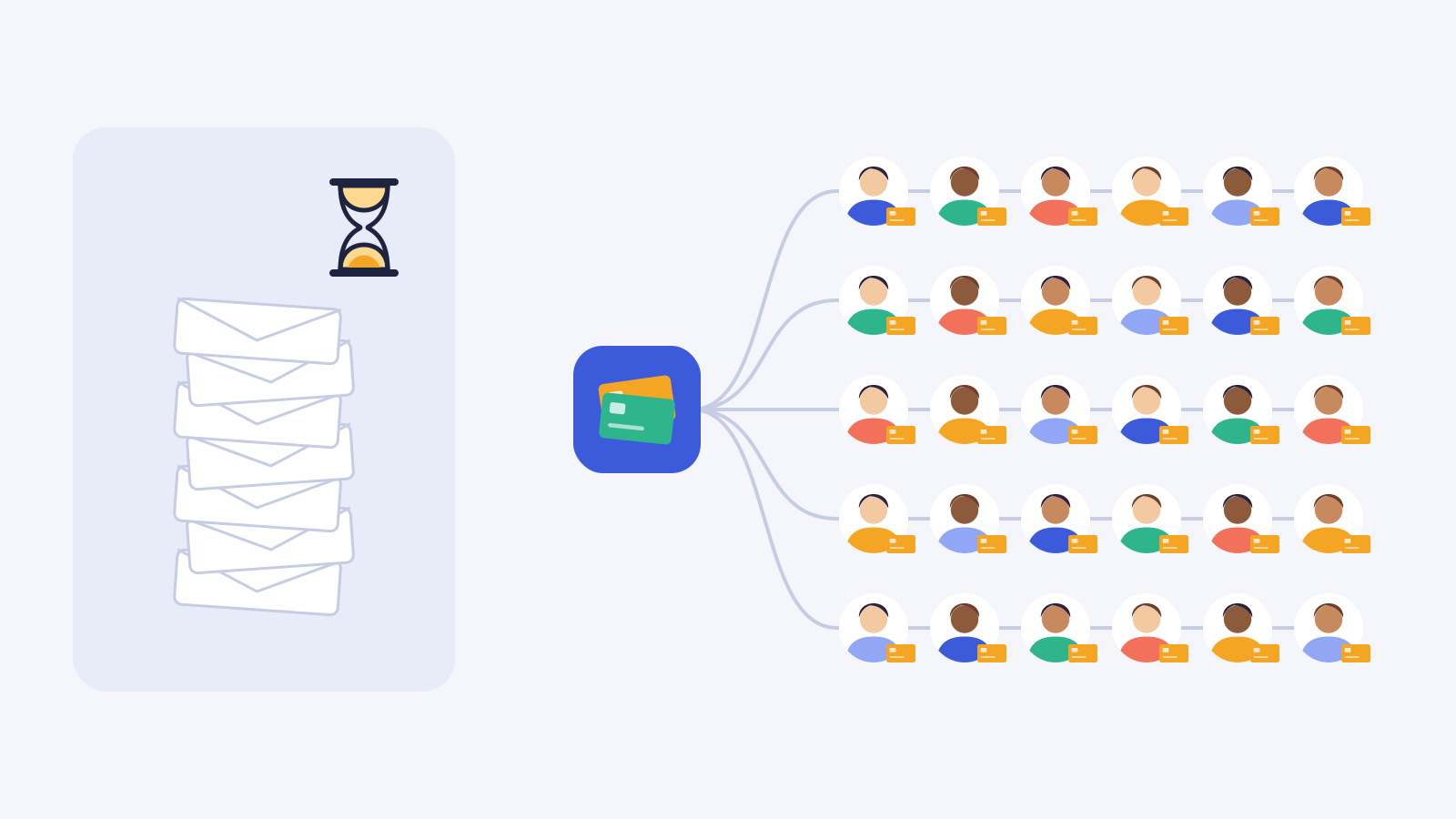
Reward choice looks different again once referral volume grows. Manual approvals work fine for fewer than 50 participants, but not several thousand. A well-chosen incentive that arrives late or requires support is a poor referral experience.
The answer isn't more reward types; it's more flexible distribution. Giftogram offers bulk sending, scheduling, and automated fulfillment, letting the same program logic scale across a larger audience without additional processes.
Recruiting teams face a similar problem with employee referrals. An attractive referral bonus loses its appeal if approval is unclear or fulfillment is slow. The pressure increases in high-volume staffing services, where referral activity must run as a repeatable process. Customer referral programs operate in a different context, but the lesson is the same: delivery is part of the incentive. So which is best?
Store credit and discounts are strongest when another purchase is already part of the customer's normal behavior. Cash is useful when direct financial value is the priority. Recipient-choice rewards suit broad audiences where tastes, locations, and purchase cycles differ. The best rewards for referrals are incentives that stay relevant to the customer, fit the relationship, and are easy for the business to deliver consistently.
©YulysLLC - 2026 All Rights Reserved | Terms of Service | Privacy Policy | Data Deletion | Yulys Ads Program