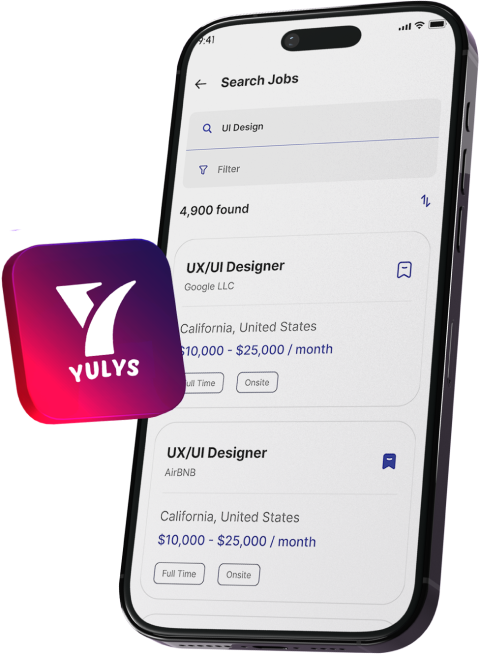
Get The Yulys App
Start your job search on-the-go and
never miss
a message or job alert.
Get The Yulys App
Start your job search on-the-go and
never miss
a message or job alert.


Most people run a job search out of the same inbox they use for everything else. Applications land between delivery notifications and newsletters, recruiter replies get buried under a weekend of group chat digests, and the one message that mattered arrives on a Tuesday when there are 90 unread items above it.
A separate address for job hunting sounds like a small piece of housekeeping. In practice it changes how well you run the search because it changes what competes for attention, and you can open it deliberately rather than glancing at it forty times a day.
Three things, mostly. It stops applications getting lost in general noise. It gives you a single searchable record of who you contacted, when, and what you sent, which matters enormously by week six when the roles start blurring together. And it separates your search from your current work account, which is the account you should never be running a job hunt through in the first place.
Set the address up with your real name in it, in a format a recruiter can read aloud without wincing. This is the address that appears at the top of your CV and in every reply, and it is doing more work than people credit.
A dedicated email account for your search is also a privacy decision. During an active hunt you will hand your address to job boards, agencies, application portals and a fair number of companies you never hear from again. Each of those becomes a place your details sit. Keeping that traffic away from your personal and financial correspondence limits the spread.
It also means you can walk away cleanly. When the search ends, you have one account to archive rather than months of recruiter mail threaded through your family photos and your bank alerts.
Being organised has a security benefit too. Fake job offers are a persistent problem, and they arrive looking exactly like the real thing. The US Federal Trade Commission documents the recurring formats, including bogus work-from-home roles, fake placement services and offers that require you to pay for training, equipment or a background check up front.
The tell is nearly always money moving towards the employer. A genuine employer does not ask a candidate to pay a fee, does not send a cheque and ask for change back, and does not hire someone over a messaging app without a single conversation. When your job mail is in its own inbox, the odd one out is far easier to spot.
The same logic applies to the organisations receiving your application. Anyone who has looked at how employers are expected to protect payroll and HR systems will recognise that candidate data is sensitive long before anyone is hired.
Setting up a search inbox takes about ten minutes. It won't get you an interview on its own, but it removes a category of avoidable loss, which is the applications that went nowhere because a reply arrived on a busy day and nobody ever saw it.
©YulysLLC - 2026 All Rights Reserved | Terms of Service | Privacy Policy | Data Deletion | Yulys Ads Program