Get The Yulys App
Start your job search on-the-go and
never miss
a message or job alert.
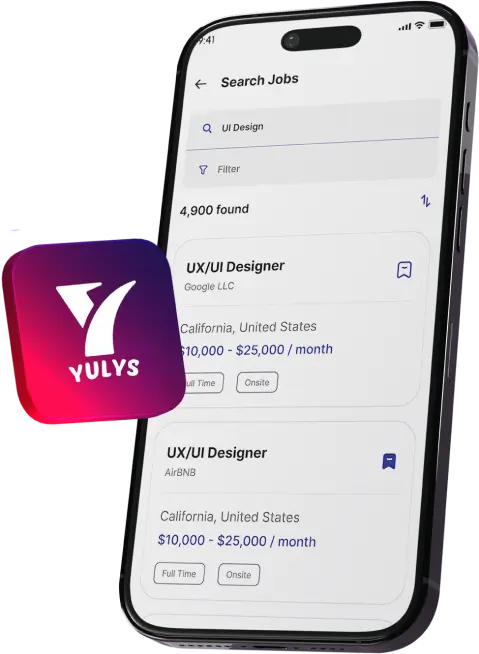
Get The Yulys App
Start your job search on-the-go and
never miss
a message or job alert.


Technical interview is all about checking your ability to do the job. So, its questions mainly about the position for which you are applying like whether you can write the code, fix the bug, explain the idea, etc. That’s it. You can’t cram answers word for word, but the questions follow patterns, and once you see them, they stop being scary.
Below are ten that show up again and again. After them, we’ll get into something newer: interviews where an AI asks the questions.
Simply put they are just a mean to test your skills. A developer might get a coding problem. A data analyst might get a messy SQL query. Someone applying for IT support could hear, “A user can’t connect to the VPN. Where do you start?”
Most technical questions asked in interviews land in one of four camps. Some check what you know (“What’s the difference between X and Y?”). Some make you build or fix something on the spot. Some ask you to design a thing from scratch. And some just want a story about a technical problem you’ve dealt with before.
The interviewer isn’t only grading your answer. Honestly, they’re watching what you do when you get stuck. First-timers forget that, and it’s the best news in this whole post, because you can practice being stuck out loud.
Because most people are nervous, and nerves eat prep time. A 2025 study on how software engineering candidates get ready for interviews found that 58.8% of participants felt anxious while preparing. Plenty said they never felt ready enough, which sounds painfully familiar.
Here’s the part we find funny, in a sad way. An Adobe survey of over 1,000 people found that candidates spend close to five hours worrying about an interview and only about three actually preparing for it. Same survey: people who researched the company and role ahead of time reported 17% more confidence than people who just rehearsed answers.
So you won’t kill the nerves. But you can move some of those worry hours into practice hours. That swap does more than any pep talk.
You’ll hear this almost everywhere, and it’s basically a free pass. Choose to tell something that you know all about. Tell what was the problem, how you resolve it, what tools you used, and how would you redo it now. Class projects count. Interviewers hiring for entry-level jobs expect them. Just be clear about which parts were really yours.
Maybe it’s an API, or “the cloud,” or what a database does. They want to know if you understand it or just know the words. A good move is a plain comparison. An API is like a waiter taking your order to the kitchen. You don’t need to know how the stove works.
Data structures are the bread and butter of coding rounds. You should be comfortable with arrays, linked lists, stacks, queues, hash maps, and trees. But don’t stop at definitions. The real answer is about choosing. Arrays are quick when you want something by its position. Linked lists are friendlier when you keep inserting things in the middle.
Time and space complexity comes up either directly or as a follow-up to whatever you just wrote. Nested loops? Expect “can you make that faster?” Get in the habit of saying your solution’s complexity out loud before anyone asks. It makes you look like you’ve done this before.
Nobody has one right answer here, and that’s the point. They want to hear a process. Check the logs. Compare the environments. Look at what changed recently. Try to reproduce it. Narrow it down. Say your steps calmly and in order. A steady method beats a lucky guess.
Instead of repeating textbook definitions, tell something that you will tell your friend to understand it. Something like “SQL is used when your data is neat and the relationship between pieces matter. While NoSQL is used when your data shape keeps changing or you have to spread it across multiple servers.
Live coding is where a lot of people lock up. You can make it easy with a few things. Repeat the problem in your own words. Ask about edge cases like empty input or capital letters. Say your plan before you type. If you got stuck, say that too and explain what you are trying. Interviewers care more about your communication skills than your perfect first draft.
System design sounds huge for a first interview, but the entry-level version is usually small. Begin with what the system needs to do. Sketch the main parts, maybe a database, an API, a cache. Explain why you picked what you picked. Nobody expects you to rebuild Netflix on a whiteboard. They just want to see you organize a messy idea.
Talk about readable names, small functions, version control, and some kind of testing, even if it’s only unit tests on side projects. The underlying message is that you think about the next person who has to read your work. That reads as maturity, and it’s rarer than you’d think.
You’ll hear this one more each year. Be honest. Say you use AI for boilerplate, quick explanations, or brainstorming. Then show you don’t trust it blindly: you read the code, run it, test it, and you won’t paste in anything you can’t explain. They’re checking whether you can use these tools without being used by them.
Here’s something many first-timers don’t see coming. Your first technical screen might not include a person at all.
A Resume.org survey of 1,399 US workers who knew their company’s hiring practices found that 57% of companies already use AI in hiring, and 34% use it in interviews. Of those, 66% have AI analyze what candidates say, and 65% use it to transcribe. About half let it run the interview directly. Candidates are using AI too. One roundup of 2026 research says 74% of job seekers use AI somewhere in their search, and 22% admit to using it during live interviews.
So what does an AI-based interview technical question actually look like? Mostly the same questions, delivered differently. You might get a recorded prompt to answer on camera. You might get a timed coding test that scores itself. Or you might get follow-up questions built from whatever you said a minute ago.
Some things help. Speak in full sentences, because the system is often reading a transcript of your exact words. Keep answers tight. Practice out loud with a timer, since reading answers silently doesn’t build the same skill. And talk to the camera like it’s a person, because you’re still being judged on clarity.
Also, don’t sneak in a hidden AI helper. Employers are catching on, and it’s a quick way to lose an offer you’d otherwise get.
You don’t need six months. Two weeks of steady effort goes a long way.
Start with the job post and read it slowly. Every tool, language, and skill listed is a study topic. If it mentions Python and SQL, don’t burn a week on a language that isn’t there.
Spend the next several days actually practicing. A few problems a day is plenty. Then run a mock interview. Ask a friend, or record yourself. It’s awkward. Do it anyway, because the first time you explain your thinking aloud shouldn’t be in the real thing.
In the last couple of days, research the company: what they make, who buys it, what problems they probably have. Write down two or three questions for them. That’s the same habit that gave Adobe’s respondents their confidence boost.
And sleep. We know. Boring. It works.
Technical prep is one piece. You also need a resume that survives screening software, and a place to find roles worth interviewing for.
Yulys is a job platform where you can search in-house and remote jobs and use a resume builder to put together an ATS-friendly resume from a template. There’s also a mobile app if you want job alerts on your phone.
If you’d like more to read, three posts on the Yulys blog pair well with this one.
Your first technical interview won’t feel comfortable. Almost everyone in that chair is nervous too. If you know your basics, can explain your thinking clearly, and have a couple of real projects to talk about, you’re in better shape than it feels like right now.
Pick two questions from this list and answer them out loud today. That beats another hour of worrying.
Start with the job description, since it tells you what to study. Practice problems out loud, do at least one mock interview, and research the company. Try to spend more hours practicing than worrying. In Adobe’s survey, candidates did the opposite.
They test the specific skills a role needs. That covers coding problems, concept explanations, debugging scenarios, system design, and questions about technical projects you’ve done. Entry-level interviews lean more on fundamentals and how you think than on deep specialization.
No. Interviewers often care more about your reasoning, your questions, and how you recover from a slip. “I’m not sure, but here’s how I’d figure it out” is a perfectly respectable answer.
The questions are often the same, but the delivery changes. You might answer a recorded prompt or a timed challenge while software analyzes your response. Practice speaking clearly and briefly, and be ready to explain your reasoning with no human nodding back at you.
If it’s true, yes. Say how you use them and how you check the results. Claiming you never touch them can sound unrealistic, and leaning on them too hard can sound careless.
1. Adobe: Interview Prep Tips, What Candidates and Hiring Managers Want Supports the statistics about candidates spending more time worrying about interviews than preparing, and the confidence benefits of researching a company and role.
2. How Do Software Engineering Candidates Prepare for Technical Interviews? A 2025 research paper examining technical interview preparation, candidate anxiety, and preparation methods. It supports the statistic that 58.8% of participants felt anxious while preparing.
3. Resume.org: 1 in 3 Companies Anticipate AI Running Their Hiring Process by 2026 Supports the figures about AI adoption in recruitment, including the use of AI during interviews.
4. HR Dive: 1 in 3 Companies Say AI Will Run Their Hiring Process by 2026 Provides additional reporting on Resume.org's survey findings, including AI use in hiring and concerns about automated recruitment.
5. Adobe Blog: Preparing for Your Interview, Tips and Strategies Offers additional guidance on researching employers, preparing examples, and communicating confidently during interviews.
©YulysLLC - 2026 All Rights Reserved | Terms of Service | Privacy Policy | Data Deletion | Yulys Ads Program