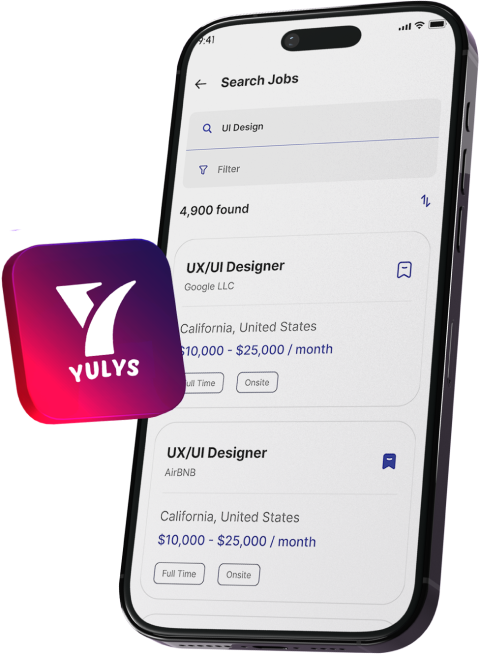
Get The Yulys App
Start your job search on-the-go and
never miss
a message or job alert.
Get The Yulys App
Start your job search on-the-go and
never miss
a message or job alert.


Building a startup is one of the most exciting things a founder can do. But one of the most overlooked bottlenecks in its scaling journey is people management. While founders focus on product, sales, and fundraising, the operational side of running a growing team quietly accumulates debt. Spreadsheets multiply, and onboarding becomes inconsistent.
To address all these issues, a human resource management software is of great help. In this blog, we have explained the significance of these solutions for startups in detail, so keep reading to learn more.
HR management software helps organizations manage employee-related processes, including recruitment, onboarding, payroll, attendance, leave tracking, performance management, employee records, compliance, and reporting, from a centralized platform. It automates routine HR tasks, reduces manual work, improves accuracy, and streamlines workforce operations.
Modern HR management tools are designed to handle day-to-day operations, for example, employee management, payroll, recruitment, attendance tracking, and reporting. Some commonly included capabilities include:
Instead of manually preparing paperwork, assigning software access, and scheduling orientation sessions, HRMS tools automate the entire hiring workflow. Thus, new employees receive structured checklists, digital forms, policy documents, and system access automatically upon accepting the employment offer.
Payroll is one of the most error-prone and time-sensitive HR functions, but HRMS systems automate salary calculations, tax deductions, attendance-based adjustments, pay slip generation, and direct deposits using predefined rules and employee data to ensure employees are paid accurately and on time.
The platform streamlines HR operations by centralizing leave requests, shift scheduling, overtime calculations, and attendance tracking in a single human resource management solution, powered by automated workflows and real-time record synchronization. As a result, HR experts can reduce administrative workload, improve accuracy, and accelerate approvals.
Regular check-ins, goal tracking, 360-degree feedback, and performance reviews are built into modern HRMS platforms to ensure structured, consistent performance conversations even as teams grow rapidly. Through these features, managers can identify employee strengths, address performance gaps early, and support continuous professional development across the organization.
HRMS tools track regulatory requirements, automate compliance alerts, and generate audit-ready reports by continuously monitoring policy updates, maintaining centralized employee records, and automatically flagging missing documentation. As a result, startups can reduce compliance risks, improve regulatory accuracy, and stay prepared for audits across multiple jurisdictions.
HRMS tools include employee self-service portals that allow employees to access pay slips, update personal information, submit leave requests, and review benefits independently through a centralized platform. These portals simplify routine HR interactions by consolidating employee information and requests into a single, accessible system.
Now, let us get to the part that matters most for ambitious founders: how does HRMS actually make a startup grow faster? The connection is more direct than most people realize.
Every startup wants new hires to contribute quickly. The time between a new employee’s first day and the moment they are independently productive is often called “time-to-productivity,” and it directly affects growth velocity. Automated onboarding helps reduce this timeline. When new hires arrive with their devices configured, documents completed digitally, onboarding materials prepared, and schedules already organized, they can begin contributing much faster.
Research also shows that companies with structured onboarding processes improve new hire retention by 82% and increase productivity by more than 70%. In addition, 69% of employees say they are more likely to stay with a company for at least three years after a strong onboarding experience.
Startups cannot afford to have their best people buried in administrative tasks. When payroll, compliance tracking, leave approvals, and employee data management are handled automatically, founders and HR professionals can redirect that time toward the work that compounds: hiring strategy, culture development, leadership training, and organizational design.
Without data, HR decisions are based on intuition; with HRMS analytics, they are made based on evidence. Real-time dashboards give startup leaders visibility into over-hired or under-resourced departments, team attrition rates, and performance gaps. Moreover, machine learning algorithms in modern HRMS solutions enable predictive analytics, providing insights into employee behavior, turnover patterns, and performance trends. Through this proactive approach, HR experts implement early interventions before problems escalate.
Manual systems have a ceiling. At some point, spreadsheets break, inboxes overflow, and processes meant for ten people become unmanageable at fifty. Because HRMS systems are built to scale, you can go from onboarding two people a month to twenty without changing your strategy, while the system automatically handles the increased volume.
Scaling a startup is hard enough without inefficient hiring, onboarding, and people management processes slowing you down, which is why the right HRMS gives your team the infrastructure to grow with confidence rather than confusion. Start before you feel like you need it, because by then, the cost of waiting has already compounded. With the right systems in place early, your team can spend less time fixing operational bottlenecks and more time focusing on growth, culture, and long-term business goals.
©YulysLLC - 2026 All Rights Reserved | Terms of Service | Privacy Policy | Data Deletion | Yulys Ads Program