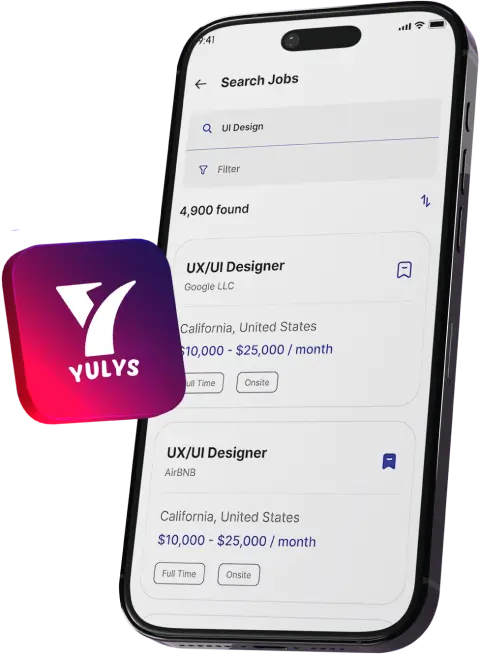
Get The Yulys App
Start your job search on-the-go and
never miss
a message or job alert.
Get The Yulys App
Start your job search on-the-go and
never miss
a message or job alert.


Spreadsheets get you started, but they cap how fast and how well you can hire once applications pile up. As you scale, manual tracking becomes the bottleneck that costs you top candidates. Already, 64% of hiring managers call their process inefficient, and 52% of job seekers report a poor application experience, a direct hit to your employer brand.
Bottom line: with average cost-per-hire above $4,000 and time-to-fill over 40 days, moving from spreadsheets to a purpose-built hiring system, backed by capable IT support, is an investment that pays back in speed, savings, and better hires.
For many small to medium firms, spreadsheets have long been the tool of choice for managing the employment process. Cheap, cheap, cheap, and cheap and identifiable. But when companies grow, and the number of applications grows, these solutions quickly demonstrate their limitations. Spreadsheets are error-prone, not automatic, and convey little insight other than simple data keeping. This inefficiency can result in a longer recruitment cycle and missed opportunities to get the best people.
In fact, recent research revealed that 64% of recruiting managers think that their recruitment process is inefficient and manual entry and tracking is a huge bottleneck. The problems highlight the need for more robust technologies to accelerate procedures and generate actionable intelligence.
Spreadsheets usually miss the nuances of today's staffing demands. It is not easy to conduct interviews, keep track of correspondence with applicants, and liaise with the many stakeholders involved. It may lead to data inconsistency without central administration, which may lead to confusion or loss of candidate information. Spreadsheets also lack the automation features (such resume processing, candidate scoring, or auto-alerting) that are vital for staying ahead in competitive job markets.
According to Glassdoor, 52% of job seekers had a terrible applicant experience. Clearly, a competent hiring process is important to defend corporate brands. The challenges are compounded by reliance on manual spreadsheet administration, which leads to more frequent delays and mismanagement.
If you’re having trouble keeping up with communication with candidates, tracking the status of applicants or data issues, it’s time to upgrade your hiring process from spreadsheets. If your HR team spends more time updating spreadsheets than talking to prospects, it’s time to explore technologies created expressly for recruitment.
Other red flags include missing deadlines, misplaced resumes, or not being able to provide information on hiring analytics. If your recruitment staff can’t get a clear picture of where prospects are in the process or promising candidates are falling out of the funnel due to sluggish follow-up, it’s time to transition from manual tools.
That’s what specialized managed IT services are for. TravTech offers customised solutions that integrate with job boards and communication platforms, automate mundane chores, and deliver real-time statistics. Such technology can help organizations to cut down on their administrative workload and make the hiring process more effective.
If you operate with sensitive application data, technology adoption can help with compliance and data protection. Spreadsheets simply lack the security safeguards and audit trails that dedicated hiring platforms have thus you’re more likely to encounter data breaches or regulatory compliance issues.
You require technical abilities to make sure that data is safeguarded and new hiring methods can play nicely with the existing infrastructure. A specialized IT support team can help to fill this gap by providing regular maintenance, troubleshooting, and upgrading.
The TrustSphere IT team, for example, is looking at delivering IT helpdesk service on the HR technology platforms. They ensure that recruitment teams are not left with much downtime, and that critical application data is kept secure. Organizations can confidently deploy new hiring technologies, knowing that trusted IT support will not interfere with their day-to-day operations.
Another significant role of the IT support teams is to customize the hiring systems to the discrete procedures of the enterprises. They can assist with the development of automatic rules, integrating integrations with other software and training users. “By working together in this way we can best leverage our technology investments and reduce end-user pushback.”
And with hiring technology advancing at a rapid pace, ongoing IT support ensures that systems are updated with security updates and new features. Taking a proactive approach to this can reduce the risks and guarantee the recruitment process is a success.
Concrete benefits of moving away from spreadsheets to dedicated employment systems: • Automation improves data accuracy by reducing the errors that are common when entering data into spreadsheets manually. Better Teamwork: With cloud-based technologies, several team members can access and update candidate data simultaneously. Real-time dashboards and reporting provide you the knowledge you need to make faster recruiting decisions. - Scalability - The more the workload grows, the more recruitment systems can manage without any additional admin effort. Enhanced candidate experience: candidates are engaged, receive timely contacts and regular updates. Security and Compliance Add more robust access restrictions and audit trails for sensitive data and regulatory compliance.
According to research, organizations using applicant tracking systems (ATS) reduce time-to-hire by an average of 20-30 percent, with direct productivity and savings on costs. These technologies also increase the efficiency of recruiters by 50%.
These benefits translate into competitive advantages. “Faster hiring means faster filling of key roles, closing the gaps in productivity. More teamwork equals better hires. “It’s a more professional and responsive experience for candidates and drives employer brand and offer acceptance rates.”
One of the biggest concerns for organizations is how new hiring technology would integrate with existing systems such as payroll, HR administration, and communication platforms. Modern systems often have the ability to integrate and so increase the efficiency of the workflow between departments.
Organizations can prevent data silos and duplication of labor by choosing a hiring system that has the capacity to integrate. Together, these capabilities help enhance transparency and allow data about your personnel to flow seamlessly from recruiting through onboarding and beyond.
For example, integration with payroll systems can help automate the transmission of new hire data, reducing manual entry errors and speeding up the onboarding process. The calendar software sync also helps with scheduling interviews effectively. The communication tools are integrated to facilitate quick communication with candidates and hiring managers.
These interfaces save time and increase integrity of HR procedures of data. One platform for better workforce planning and analytics so leadership can make decisions based on all the information.
The introduction of new technology is not a technical issue but a change management process. To successfully implement, your HR team and your recruiting managers need to be trained and comfortable with the new technologies.
Integrated training programs, transparent documentation and continuous assistance help to lower resistance and increase adoption rates. Also, gathering data throughout the launch period will help you pinpoint sore spots and areas of improvement earlier.
It also helps to identify key stakeholders who can promote change and generate buy-in across the firm from the get go. A good attitude and a smoother transition will result from the clear communication of the reasons for the change, its benefits and the time frame.
You can also use quantifiable targets such as shorter time-to-hire or higher candidate satisfaction to demonstrate that the new system is successful and justify continued investment in recruiting technology.
Relying on outdated approaches like spreadsheets can be disastrous for your organization’s ability to attract and retain top performers in the war for talent. Purpose-built hiring platforms backed by capable IT services enable effective, scalable, and data-driven recruitment.
In recruiting, a competitive advantage exists in the timing of when to improve your hiring tools and how to handle trusted partners. The benefits of ROI include speedier hiring, a better candidate experience, and better organizational performance overall.
In an industry where average cost-per-hire might be well over $4,000 and the average time-to-fill is more than 40 days, simplifying recruiting is not just a convenience, it’s a requirement. Transitioning from a spreadsheet to a full hiring system with the help of professional IT services is an investment that pays off in efficiency, cost savings, and competitive advantage.
©YulysLLC - 2026 All Rights Reserved | Terms of Service | Privacy Policy | Data Deletion | Yulys Ads Program