Get The Yulys App
Start your job search on-the-go and
never miss
a message or job alert.

Get The Yulys App
Start your job search on-the-go and
never miss
a message or job alert.


Managing an insurance claim involves much more than recording the initial loss. Claims teams need to collect information, assign adjusters, manage documents, track reserves and payments, communicate with claimants, monitor deadlines, and keep accurate records throughout the process.
Insurance claim management software brings these activities into one system. Instead of relying on spreadsheets, emails, separate document folders, and disconnected applications, insurers and claims organizations can use a centralized platform to manage claims from first notice of loss through resolution.
The right platform depends on the size of the organization, the types of claims it handles, its existing technology, and the amount of workflow customization it requires. Below are eight insurance claim management systems to consider in 2026.
An insurance claim management system is software used to organize and manage the different stages of the claims lifecycle. Depending on the platform, this can include claim intake, assignment, documentation, investigation, reserve management, payments, communication, reporting, and claim closure.
Modern platforms also use workflow automation to reduce repetitive administrative tasks. Some provide policyholder portals, mobile access, integrations with accounting and policy systems, analytics, and AI-assisted tools.
For claims teams, the goal is not simply to store claim information. A good system should make information easier to access, keep processes consistent, reduce unnecessary manual work, and provide better visibility into each open claim.

Best for: TPAs, adjusting firms, carriers, MGAs, captives, and self-insured organizations
VCA Software is a configurable claims management platform built around the day-to-day workflows of claims organizations. It supports the claims process from initial intake through resolution while bringing claim records, documents, financial information, communication, and reporting into one environment.
For claims teams replacing spreadsheets, email-based tracking, or separate systems, digital claims management software can centralize claim records, documents, assignments, financial data, and communication in one platform. VCA also supports configurable workflows, allowing organizations to adapt the system to their existing claims processes and operational requirements.
Its ClaimsCore platform supports functions such as automated claim assignment, acknowledgements, document management, claim diaries, reserve and payment tracking, time and expense tracking, invoicing, authority limits, and digital payment processing. VCA also provides customizable rules, workflows, file layouts, fields, and reporting capabilities.
The platform can connect with systems and services such as QuickBooks, Bill.com, XactAnalysis, CoreLogic, Encircle, Sage, email platforms, Amazon S3, and policy applications. Reporting options include standard reports, custom data queries, audit tools, user performance reporting, APIs, analytics, and Lloyd's bordereau reporting.
VCA also supports different parts of the claim lifecycle, including claim initiation, coverage verification and assignment, claimant communication, investigation, reserves, settlement, digital payments, and analytics.
VCA Software Pricing: Available by quote based on the organization's requirements and platform configuration.
Best for: Large and complex P&C insurance operations
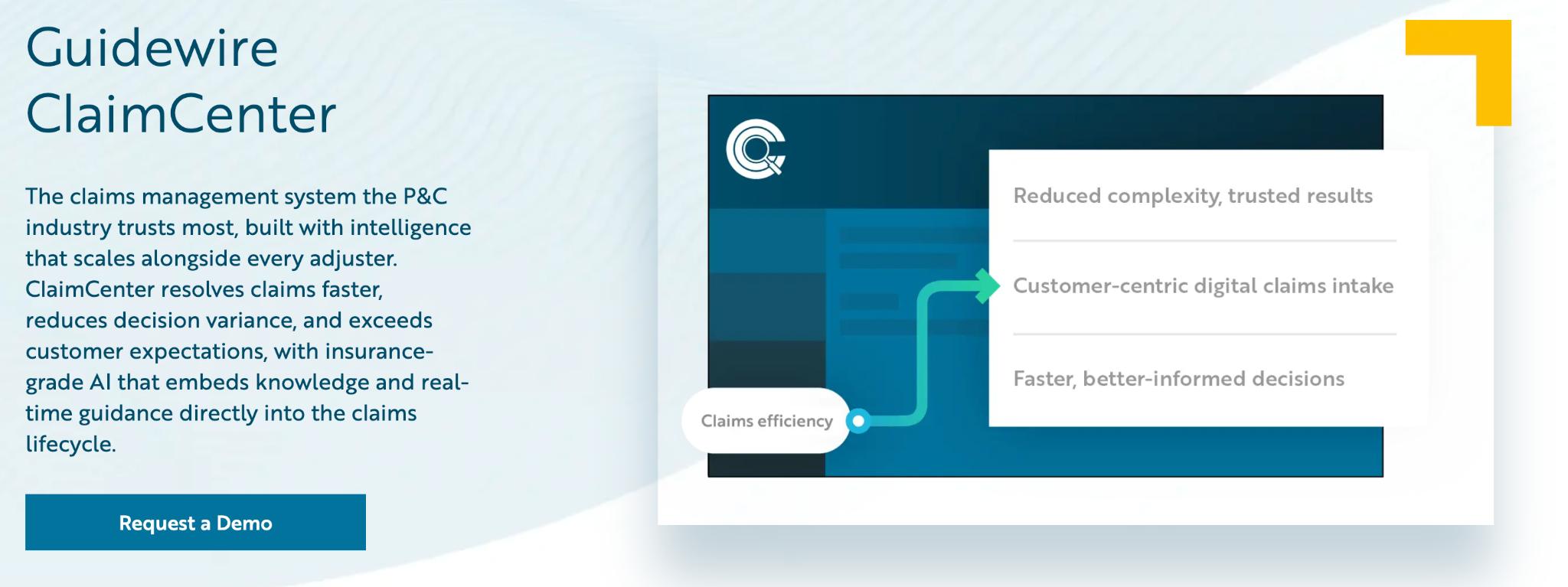
Guidewire ClaimCenter is an established claims management platform designed for property and casualty insurers. It covers the insurance claims lifecycle from claim intake through closure and is particularly suited to organizations that need extensive functionality across large claims operations.
The platform provides digital claims intake, policy search and retrieval, workflow automation, centralized claim information, analytics, and tools designed to support adjusters throughout claim handling.
Guidewire has also introduced AI capabilities into its insurance technology environment, helping claims teams access relevant information and automate parts of the claims process.
For larger insurers, one of ClaimCenter's main advantages is its ability to operate as part of the wider Guidewire ecosystem, alongside policy, billing, pricing, and other insurance applications.
Guidewire ClaimCenter Pricing: Available on request.
Best for: Organizations requiring claims, risk, and incident management capabilities
Ventiv Claims is a web-based claims management system used to manage different areas of claims administration. Its capabilities extend across incident intake, claims management, supervision, legal risk, litigation, and reporting.
Claims teams can use the platform to maintain information about individual losses, including claim details and loss causes, while keeping records organized throughout the handling process.
The system also provides reporting and analytics capabilities that can help organizations identify trends across claims and better understand overall claims performance.
Ventiv Claims Pricing: Available on request.

Best for: P&C insurers looking for claims as part of a broader core insurance platform
BriteCore combines claims management with policy administration, billing, reporting, and other core insurance functions. This makes it relevant to property and casualty insurers that want claims processes to operate within a connected insurance platform rather than using a standalone claims application.
Its claims module supports the process from first notice of loss through settlement. Adjusters can establish reserves, upload reports and other documents, track losses, issue payments, and maintain claim records within the platform.
BriteCore also provides policyholder and agent portals. Claims can be submitted digitally, while relevant policy and contact information can be used to populate new claim records and reduce duplicate data entry.
BriteCore Pricing: Available on request.
Best for: Digital-first insurers and claims organizations
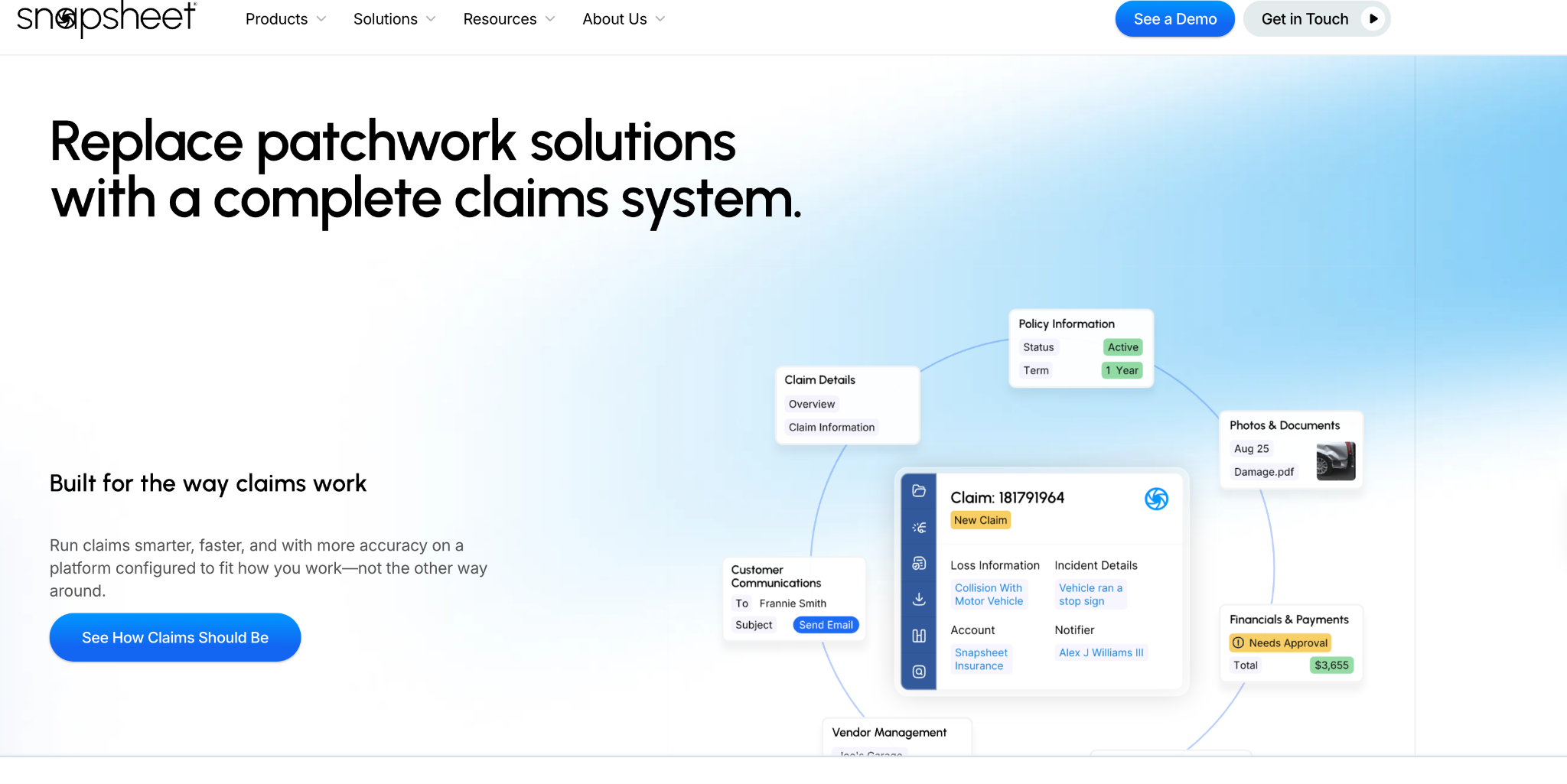
Snapsheet focuses on digital claims processing and automation. Its claims platform is designed to connect different steps of the claims process while reducing administrative work for adjusters.
The system can support processes such as FNOL, claim and exposure creation, coverage validation, assignment, communication, payments, reserves, and internal task management.
This makes Snapsheet relevant for insurers looking to digitize processes that may otherwise depend on several separate tools or manual handoffs between teams.
The platform is particularly associated with digital claims experiences and supports organizations handling auto, property, and other insurance claims.
Snapsheet Pricing: Available on request.
Best for: Enterprises with complex workflow and automation requirements
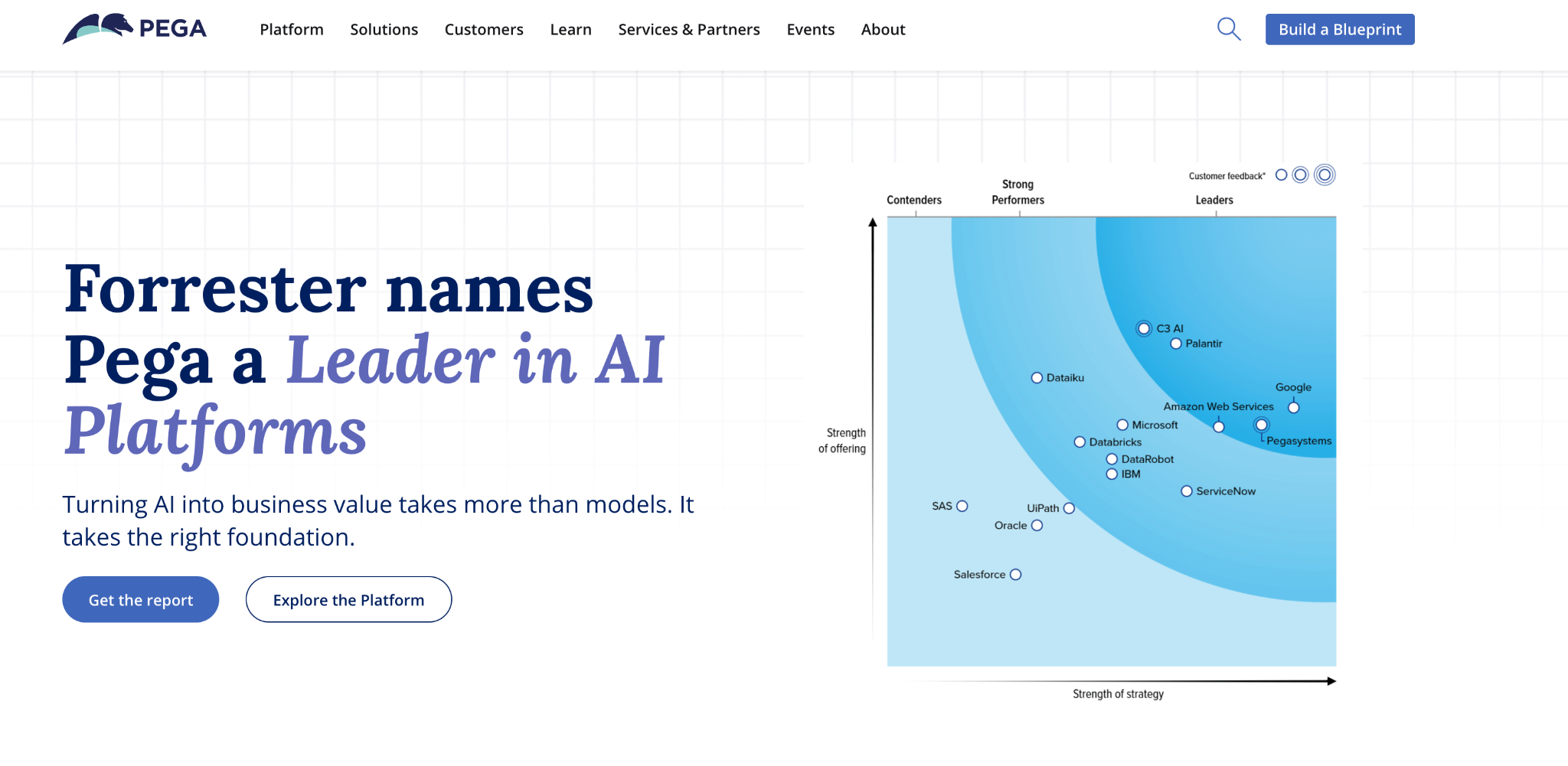
Pega Claims Management provides organizations with tools for building and automating claims-related processes. It is particularly relevant where claims workflows involve multiple business rules, decisions, departments, and integrations.
The platform can support claims operations, coverage determination, process configuration, workflow automation, and other tasks that occur as a claim moves through the organization.
Because Pega has a broader focus on workflow automation and enterprise process management, it may be most suitable for organizations that want claims management closely connected with other automated business processes.
Pega Claims Management Pricing: Available on request.
Best for: Claims organizations requiring detailed file and workflow management
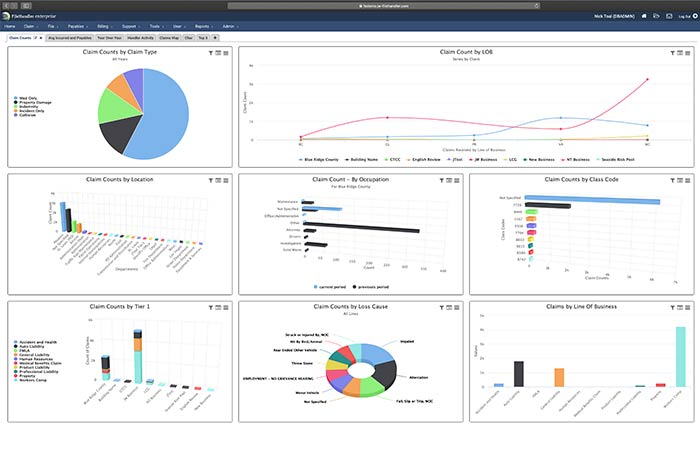
FileHandler Enterprise by JW Software is designed to support claims administration from intake through resolution. It provides a centralized location for claim files, allowing adjusters and other users to maintain information throughout investigation, evaluation, settlement, and reporting.
The platform includes functionality for claim notes, diaries, chronology, images and attachments, billing, reporting, risk management, and third-party integrations.
This combination can be useful for organizations that need detailed control over individual claim files while also maintaining broader reporting and administrative processes.
FileHandler Enterprise Pricing: Available on request.

Best for: Organizations managing multiple types of claims and incidents
A1 Tracker provides claims and risk management capabilities that can be used across different industries and claim types. The system supports injury claims, hazard reports, warranty-related claims, and other forms of claims administration.
It combines claims management with functions such as incident tracking, vendor management, compliance management, dashboards, and project management.
Organizations that need to track both claims and related risk or incident information may therefore find its broader functionality useful.
A1 Tracker Pricing: Available on request.
The claims process contains many moving parts. Without a central platform, information can become scattered between email threads, spreadsheets, shared folders, accounting tools, and individual team members.
Claims management software helps bring these activities together and gives teams a clearer way to manage information throughout the claim lifecycle.
Automation can reduce the amount of time claims handlers spend on administrative activities. Depending on the system, teams may automate claim assignments, acknowledgements, alerts, status updates, document requests, and other routine steps.
This gives claims professionals more time to focus on investigation, decision-making, claimant communication, and more complex files.
A centralized system creates a consistent location for claim details, documents, notes, photos, payments, reserves, and communication history.
When information is organized around the claim file, adjusters and managers can spend less time searching through separate applications or asking colleagues for updates.
Managers need to understand more than the status of individual claims. They may also need information about claim volumes, cycle times, reserves, payments, workloads, trends, and overall team performance.
Reporting and analytics tools can make this information easier to access and help claims leaders identify operational issues earlier.
Defined workflows can help teams follow the same steps for similar claims while still allowing exceptions where professional judgment is required.
This is particularly important for growing organizations where claims are handled by multiple teams, offices, adjusters, or external partners.
Claimants often want to know what is happening with their claim and what they need to do next.
Digital portals, automated status updates, email integrations, and mobile applications can make communication easier while reducing unnecessary follow-up calls.
Not every claims platform is designed for the same organization. Before selecting a system, consider how it fits your existing claims process and which capabilities are most important to your team.
The platform should make it easy to open a new claim and capture the information needed at first notice of loss.
Digital forms, validation rules, policy lookup, and document or photo uploads can make intake more efficient and reduce duplicate data entry.
Different claims require different processes. Look for a platform that allows workflows, fields, rules, assignments, notifications, and authority levels to be configured around your operation.
This becomes especially important for organizations that handle several claim types or work with multiple clients and insurance programs.
Claims can generate large numbers of documents, reports, photos, emails, estimates, and other files.
A good system should keep these materials organized and connected to the appropriate claim so users can quickly find the information they need.
For organizations responsible for claim financials, the ability to establish and update reserves, monitor payments, and maintain accurate financial records is essential.
These capabilities can also help managers understand financial exposure across individual claims and the wider claims portfolio.
Claims managers should be able to monitor both individual files and broader operational performance.
Useful reporting may include claim volume, closure rates, financial data, adjuster workloads, cycle time, reserve changes, and other claims metrics.
A claims platform rarely operates on its own.
Consider whether it can connect with your policy administration system, accounting software, payment systems, document services, estimating platforms, email, and other tools already used by the organization.
Claims contain sensitive financial, personal, and policy information.
Look for access controls, configurable user permissions, audit capabilities, appropriate data security measures, and support for the compliance requirements relevant to your organization.
Automation can remove repetitive steps such as assignments, notifications, data entry, and document processing.
Some newer platforms are also incorporating AI to summarize files, review documents, surface relevant information, and assist claims professionals with administrative tasks.
The important consideration is not simply whether a system offers AI features, but whether those capabilities improve actual claims workflows and reduce unnecessary work.
There is no single claims management platform that will be the best fit for every insurance organization.
Start by documenting how claims currently move through your business. Identify where information is entered more than once, where adjusters lose time, which processes depend heavily on spreadsheets or email, and which reporting tasks require manual work.
Then compare platforms based on factors such as:
A product with hundreds of features is not automatically the right choice. The better option is the platform that supports the way your claims organization works while reducing unnecessary administrative work.
Claims management software can affect nearly every part of the claims process, from the first report of a loss to final settlement and reporting.
Platforms such as VCA Software, Guidewire ClaimCenter, Ventiv Claims, BriteCore, Snapsheet, Pega Claims Management, FileHandler Enterprise, and A1 Tracker approach claims management in different ways. Some focus heavily on configurable workflows, while others operate as part of broader insurance or enterprise technology ecosystems.
Before selecting a platform, compare more than feature lists. Consider workflow flexibility, integrations, reporting, implementation requirements, financial management capabilities, and how well the system fits the claims your organization actually handles.
The right claims management system should reduce unnecessary work, give teams clearer access to claim information, and make it easier to manage claims consistently from intake through resolution.
©YulysLLC - 2026 All Rights Reserved | Terms of Service | Privacy Policy | Data Deletion | Yulys Ads Program